Intersectionality teaches us that barriers to wellbeing are more than just traits located inside a student’s brain or body. Instead, barriers are created by the interaction between the student and the systems surrounding them.
For example, research consistently shows that black and brown students, particularly those with undiagnosed neurodivergence, are disproportionately subject to exclusionary discipline compared to their white, neurotypical peers. What is then described as a behavioural issue is rarely just about a student’s choice, but rather the result of a system misinterpreting cultural expression or sensory overload as defiance. So then, for a black autistic student, the experience cannot be simplified as autism plus racism but a distinct, compounded pressure where their survival depends on navigating a system that views his existence as a threat.
Similarly, for a student from a marginalised community, a referral to a mental health professional might not feel like care at all. It might feel like a threat to their family’s privacy or a precursor to social services involvement. Mental health support that works for one group may feel unsafe to another due to cultural stigma, language barriers, or historical trauma with authority.
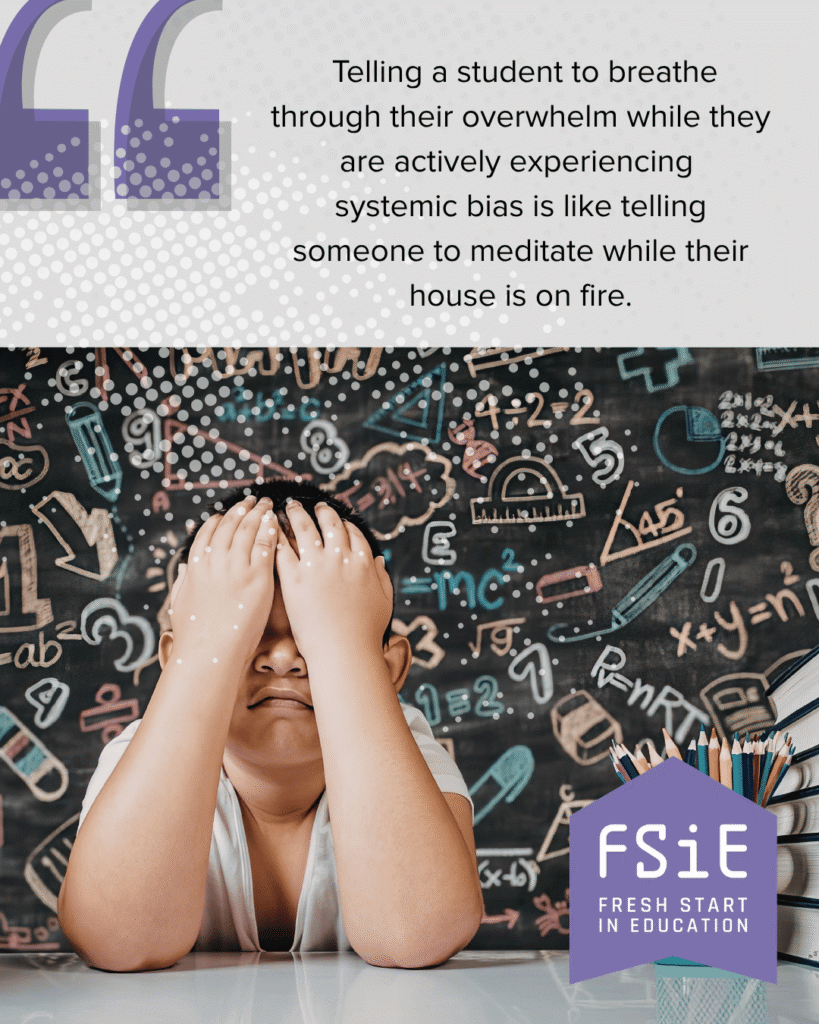
When wellbeing programs focus on resilience or mindfulness without acknowledging this labour, they risk gaslighting the student. Telling a student to breathe through their overwhelm while they are actively experiencing systemic bias is like telling someone to meditate while their house is on fire. It places the burden of adaptation entirely on the victim of the environment.
We must be honest about the fact that much of what we call inclusion is actually conditional belonging. We accept students only if they minimise the parts of themselves that challenge our comfort. The autistic student is welcomed as long as they mask successfully and don’t make weird noises. The disadvantaged student is supported as long as they don’t bring the stress of home into the classroom. The multilingual student is praised only if their communication mirrors dominant norms. The trans or queer student is safe as long as they remain non-confrontational.
True intersectional wellbeing dismantles these conditions. It asserts that a student’s right to feel safe is not something they earn by performing normativity. Chronic self-monitoring is exhausting, and a student cannot engage in curiosity, connection, creativity or learning when their energy is spent on survival and self-protection.