We’ve all read the headlines: teachers leaving in their thousands, children struggling with their mental health, burnout everywhere we seem to look. So, what are we doing about it? As the saying goes, ‘The definition of insanity is doing the same thing over and over again and expecting a different result.’ If that’s the case, then it must be time to make some cultural changes to our education system and its demands on staff and students to see different results, especially where their mental health is concerned.
As a former educator myself, I saw only too often the detrimental impact on the well-being of staff and students. Not just during exam season when the pressure is on, but daily, and increasingly since schools returned following COVID lockdowns. At that time, we were expected to do more with less; services from the NHS to social care were overstretched, and education was left to pick up the slack. It’s one of the reasons that hastened my retreat from the classroom after 20 years of service.
Since leaving the classroom, I’ve had the headspace to prioritise myself and to learn proactively about the importance of well-being, something I wish I’d known about at the start of my career. Perhaps burnout cycles could have been avoided if I had known then what I know now.
Improving mental health across a whole school is something I feel strongly about, and in my experience, it is not achieved through one-off initiatives or stand-alone programmes. You know the ones – where they bring in a Yoga teacher for a one-off session on an INSET day. Or where there’s a meeting about staff well-being and the staff are just thinking about the marking they could be doing, and leave with a to-do list as long as their arms. Instead, I have seen the greatest impact when mindfulness and mindset techniques are embedded in the school’s everyday culture, shaping how we think, speak, and respond to challenges together. A common language that’s shared with home life too.
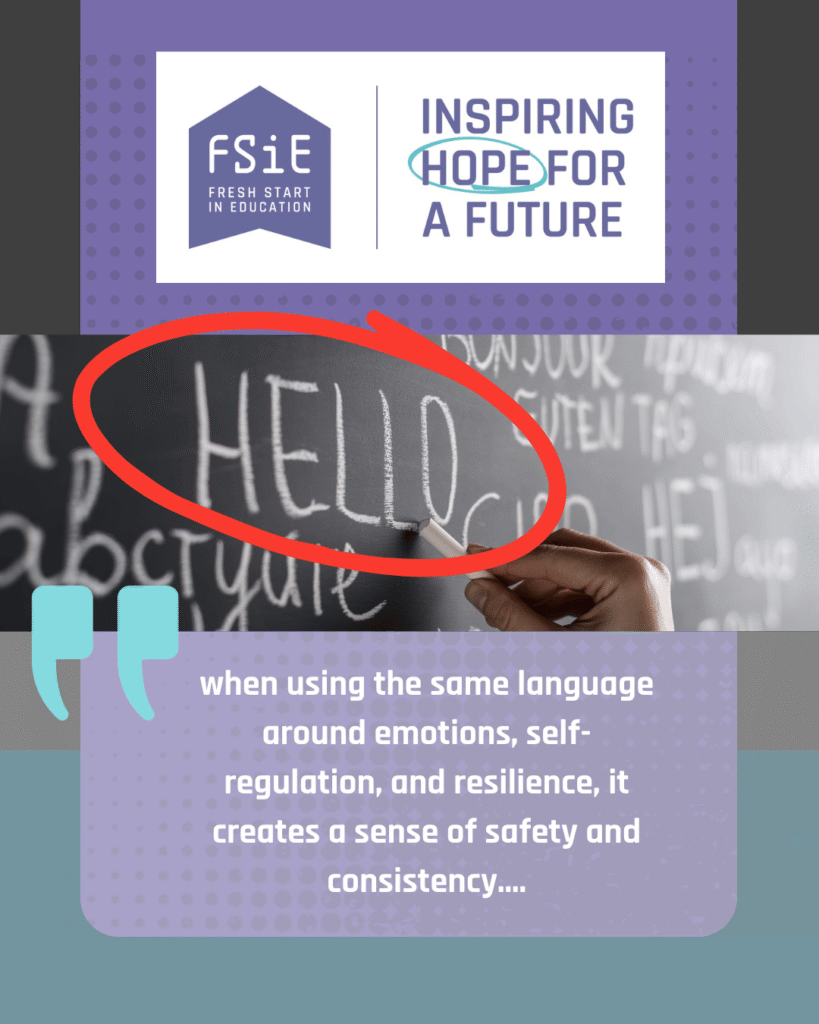
For me, the starting point is always creating a shared understanding across the whole school community. When staff and pupils are using the same language around emotions, self-regulation, and resilience, it creates a sense of safety and consistency. I have found that simple, regular practices such as starting the day with a short breathing exercise, using mindful transitions between lessons, or taking a moment to pause after playtimes can have a powerful impact on pupils’ ability to regulate and engage in learning.
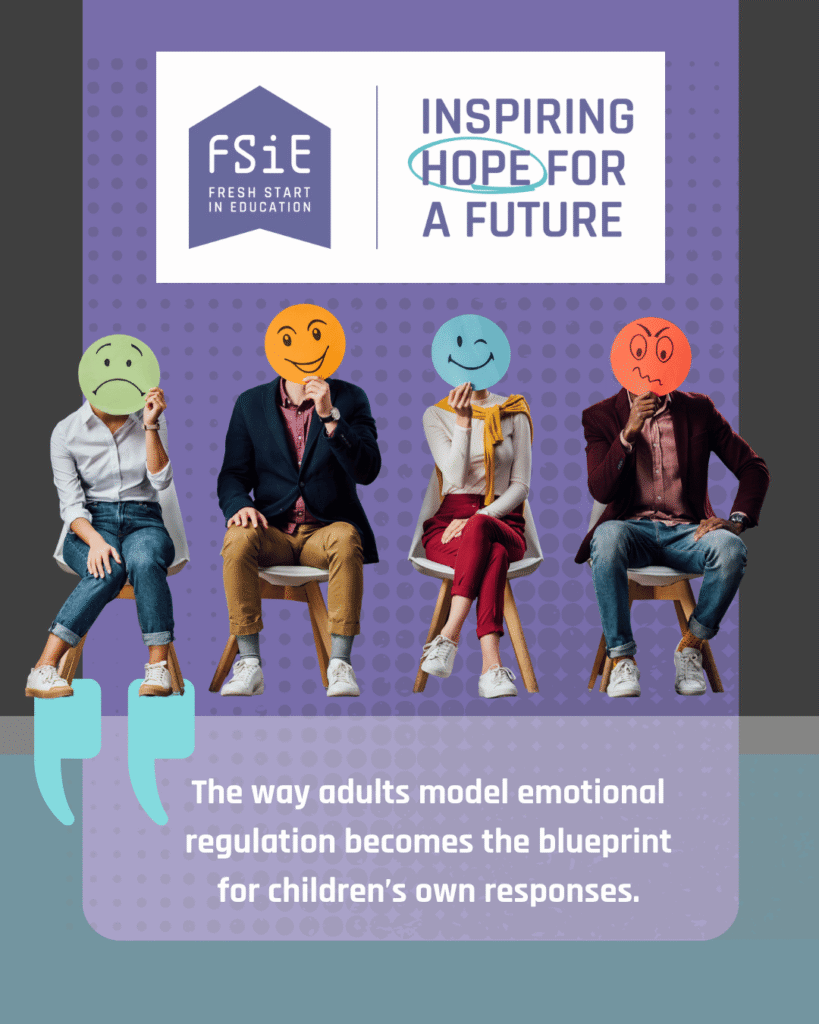
My work with MiniMe Mindfulness® has really shaped my belief in why this matters so deeply. At the heart of what we do is a simple idea: teaching positive mindfulness and mindset techniques in a fun and innovative way, so that children don’t just learn about well-being; they experience it in a way that feels accessible and meaningful. Because little eyes are always watching, I am constantly aware that the way adults model emotional regulation becomes the blueprint for children’s own responses.

With that in mind, from my perspective, staff well-being is just as important as pupil well-being. I have seen that when adults are given tools to pause, reflect and manage their own stress, it directly influences the emotional climate of the classroom. Staff who feel supported are more able to respond calmly and consistently, which in turn helps children feel secure and understood. The idea that “you can’t pour from an empty cup” is something I often reflect on in practice, and it is central to why I advocate for whole-school approaches rather than isolated interventions. It’s also one of the things that has struck me the most since leaving the classroom. Just how empty my cup was, and I didn’t even have the time to realise.
When working in schools now, I see such a vast range of practices. Staff who are on their knees with ‘new’ initiatives driven in without consultation, time or resources to properly implement and embed changes, only for the changes to change too. Unfortunately, in these schools, there’s an atmosphere, an edge, something you can’t quite name, but where staff and students alike are stressed, and relationships are strained. Here, no one really has the capacity to learn to the best of their ability because no one has that ‘felt safety’ needed to succeed. Then there are other schools, the ones where mindfulness practices are truly embedded into the culture. They consider the impact of their actions before implementation, rather than trying to mop up afterwards. There’s a lightness of mood in these schools. Yes, they are dealing with the same budgetary constraints as everywhere in the country but somehow making it work. They are proactive in their approach, rather than waiting for the problem to manifest and then trying to ‘fix’ it.
Alongside mindfulness, I have found that embedding a growth mindset in the culture is essential. When children begin to understand that their thought patterns are not fixed and that effort and persistence lead to growth, it builds resilience over time.
Encouraging language such as “I can’t do this yet” or helping pupils notice and reframe negative thinking patterns can support them to develop a more positive and flexible mindset that translates into all areas of learning and life. Modelling this for students is key, allowing them to see that mistakes are a part of the learning journey and that we all make them. Encouraging this growth mindset amongst staff, as well as students, can elevate the school morale.
The school environment also plays a key role in this work. I have seen how calm spaces, visual reminders to pause and breathe, and consistent routines can all support emotional regulation. However, what really makes the difference is not just having these tools in place, but actively teaching, modelling, and revisiting them so that they become part of daily school life rather than a separate initiative.
Ultimately, I believe improving mental health in schools requires a consistent, whole-school commitment to well-being. Through my experience with MiniMe Mindfulness®, I have seen how powerful it is when mindfulness and mindset are fully embedded into school culture. It stops being an add-on and instead becomes the foundation for how a school operates. In that space, both children and adults are better equipped to navigate challenges, build resilience, and truly flourish.