Eating disorders are often misunderstood.
They are frequently seen as being about food, weight, or appearance, but in reality, they are complex mental health conditions that are deeply connected to emotional wellbeing, identity, control, trauma, anxiety, and self-worth.
They are also profoundly isolating.
For a young person experiencing an eating disorder, the world can become smaller and smaller. Relationships can feel overwhelming. School may feel impossible. Everyday situations such as eating with others, social events, physical education and even sitting in a classroom can trigger intense distress.
For families, carers and others supporting the young person, the experience can also be isolating. Watching a young person struggle with something you cannot simply “fix” can bring fear, helplessness, frustration and exhaustion.
This is why the theme of this year’s Eating Disorders Awareness Week, Community, is so important.
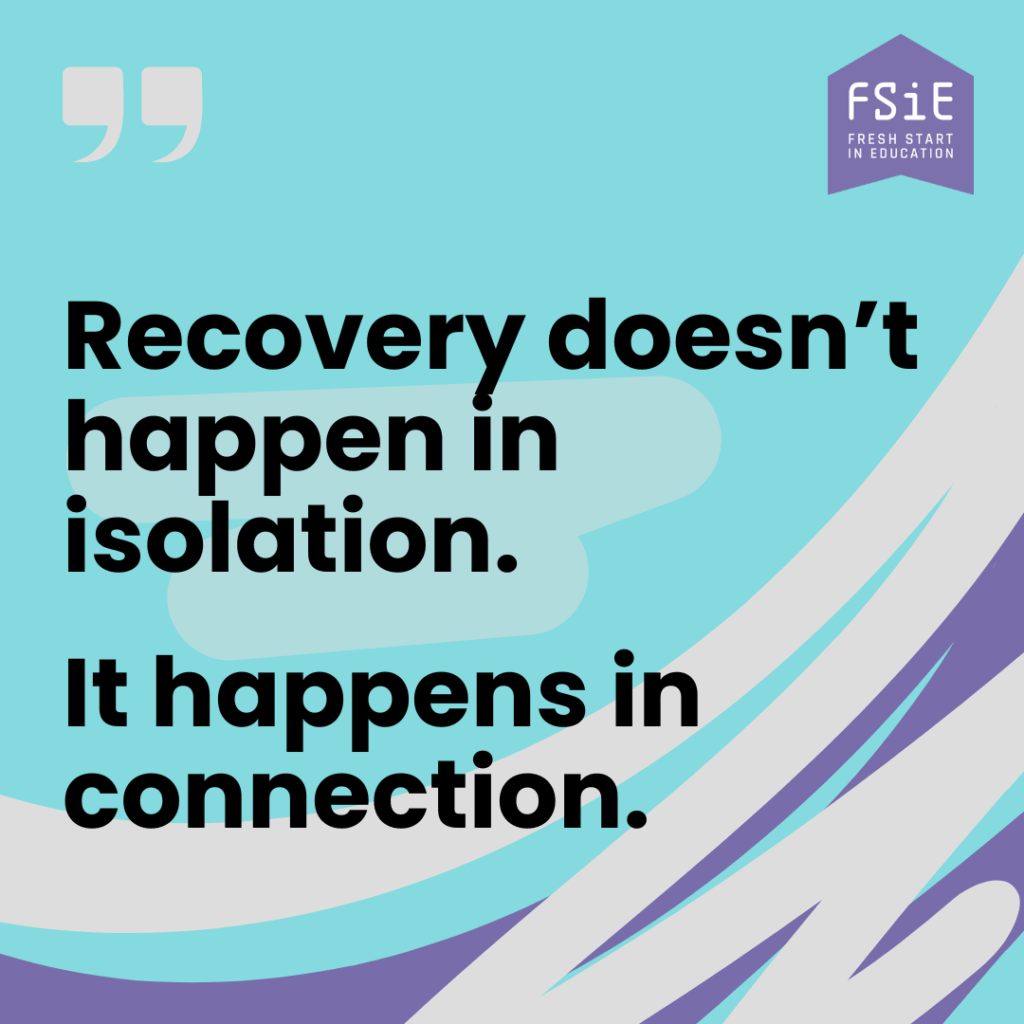
Because recovery does not happen in isolation. It happens in connection. There is Power in Community
Many young people affected by eating disorders struggle to remain engaged in education. Concentration difficulties, fatigue, anxiety, low mood, and physical health complications can make attending school feel overwhelming or unsafe.
We often see young people who:
Without the right support, these challenges can compound feelings of isolation and reinforce the disorder.
But when support is relational, compassionate, and consistent, something powerful happens.
Young people begin to reconnect.
Community does not mean large groups or busy environments.
Community means feeling seen, understood, and not alone.
For some young people, community might look like:
Eating disorders thrive in secrecy, shame, and disconnection.
Recovery grows in trust, safety, and connection.
Professionals working with young people, whether in education, health or alternative provision, play a critical role in creating environments where recovery can begin.
This includes:
Young people do not need perfection from adults.
They need consistency, patience, and belief.
Families often carry immense emotional weight when supporting a young person with an eating disorder. They may experience fear, guilt, confusion, or burnout.
Community support for families is just as important as support for the young person.
When families feel informed, supported, and connected, outcomes improve, not just clinically, but emotionally.
No family should feel they are facing this alone.
Eating disorders are serious and can be life-threatening conditions.
But recovery is possible.
And one of the strongest protective factors in recovery is connection.
A relationship.
A conversation.
A supportive environment.
A community that refuses to give up.
There is power in community because community reminds young people of something the disorder tries to take away:
You matter.
You are not alone.
And there is a way forward.
If you are reading this and recognise some of these experiences in yourself, please know that you are not alone. Eating difficulties and concerns around food, weight, or control can feel overwhelming and frightening, but support is available and recovery is possible. Reaching out can feel incredibly hard, especially if part of you believes you should cope on your own, but you deserve care, understanding, and support just as much as anyone else. Speaking to someone you trust, a health professional, or a support organisation can be an important first step. You are worthy of help, and things can change.
Beat Eating Disorders
The UK’s leading eating disorder charity offering confidential support, information, and guidance.
📞 Adult Helpline: 0808 801 0677
📞 Youthline (under 18): 0808 801 0711
📞 Studentline: 0808 801 0811
🌐 www.beateatingdisorders.org.uk
NHS
You can speak to your GP about concerns around eating, weight, or mental health. Early support can make a significant difference.
🌐 www.nhs.uk/mental-health
Shout (24/7 Text Support)
If you are struggling to cope and need immediate support, you can text:
📱 Text SHOUT to 85258
Samaritans (24/7 Emotional Support)
If you are in distress or need someone to talk to at any time:
📞 116 123
🌐 www.samaritans.org
Emergency Support
If you or someone else is in immediate danger, please call 999 or go to your nearest A&E department.