The STAND Behaviour Framework
Because behaviour speaks
For the past 15 years our experience in successfully supporting thousands of students on a 1:1 basis, many with complex barriers to learning and challenging behaviours, has shown us something important.
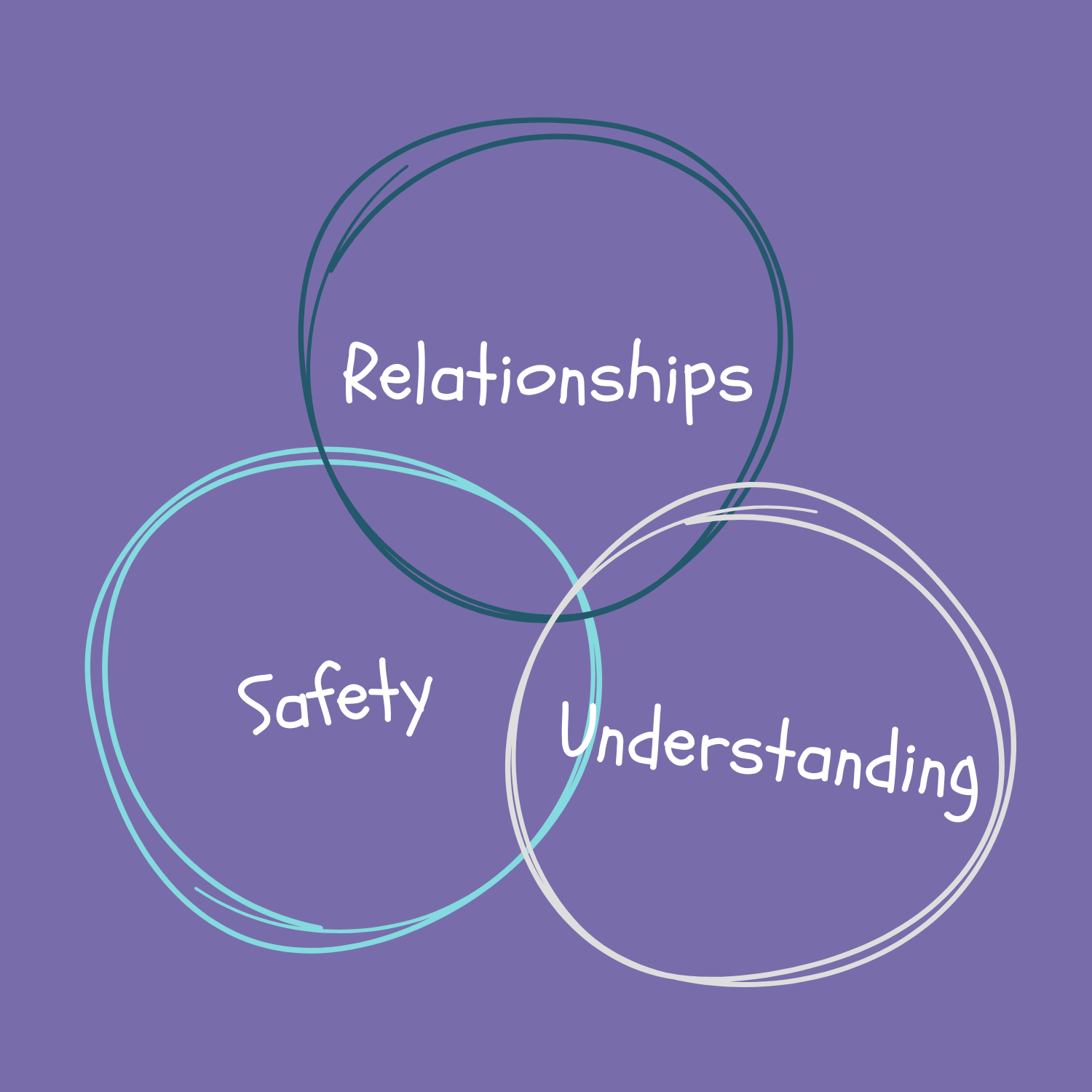
Behaviour dramatically improves when students feel safe and supported by regulated adults in dependable relationships.
This belief sits at the heart of the STAND Behaviour Framework as it brings together our experience, relational practice, and evidence-informed approaches to help parents, schools and educators respond to behaviour with confidence, consistency, and care – creating cultures where everyone can thrive.
Available courses include
Because Behaviour Speaks
Every behaviour tells a story.
This course introduces our STAND Behaviour Framework and brings together the key ideas from across the training series. If you’ve ever wondered why some approaches to behaviour work for a moment but fail to create lasting change, this course will help you see behaviour, and your role in shaping it, in a completely new way.
Understanding Behaviour Through a Relational Lens
What if the behaviour that frustrates you most is actually the clue you’ve been missing?
In this course, you’ll explore what behaviour is really communicating beneath the surface. When you learn to see behaviour through a relational lens, the question shifts from “How do I stop this?” to “What is this telling me?” and that shift changes everything.
Trauma Awareness & Emotional Safety
Some children walk into the room ready to learn. Others arrive already in survival mode.
This course explores how trauma and adversity shape the nervous system and influence behaviour long before learning begins. When you understand what safety actually feels like for a child, you’ll begin to see why connection, not control, is often the key that unlocks change.
De-escalation & Positive Behaviour Support
When behaviour escalates, the instinct is often to regain control. But what if the most powerful response isn’t control at all?
In this course you’ll learn practical de-escalation strategies that reduce threat, restore calm, and help children find their way back to regulation. You’ll also explore Positive Behaviour Support, a proactive approach that helps prevent many incidents before they even begin.
Relational Practice & Emotion Coaching
Children learn how to regulate their emotions through the people around them.
This course introduces practical relational tools such as Emotion Coaching and the PACE approach, helping you respond in ways that build trust while still maintaining boundaries. When children feel understood rather than judged, behaviour begins to shift in ways that traditional approaches rarely achieve.
Training Offerings

Twilight / CPD

INSET days

eLearning

Webinars

Digital Resources
Why a Behaviour Framework is needed.
Supporting behaviour is not simply about having a behaviour policy or a set of strategies.
It is about establishing a shared understanding about:
- how behaviour is understood
- how we respond when challenges arise
- how students are supported to regulate, engage, and learn
Without this shared approach, behaviour support can quickly become reactive, inconsistent, and fragmented.
The STAND Behaviour Framework provides a clear foundation that aligns parents and professionals, strengthens consistency, and builds the conditions where positive behaviour can develop.
Our Five Principles and Outcomes
When safety is prioritised:
- escalations reduce
- incidents decrease
- emotional safety increases
- anxiety-driven behaviour lowers
- conditions for learning improve
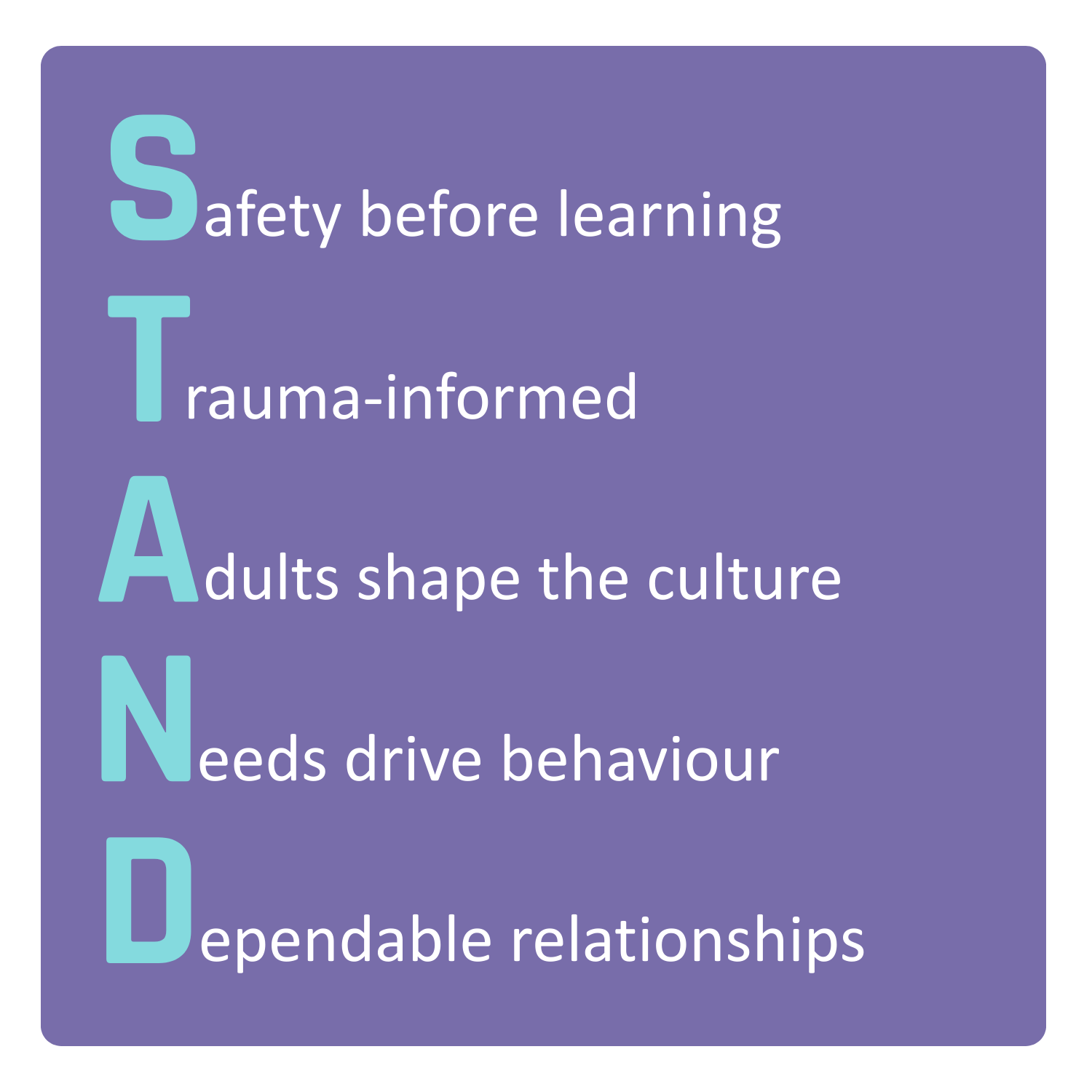
Safety before learning
Emotional and physical safety are prerequisites for engagement and progress. We know that students cannot regulate, learn, or build positive behaviour when they feel unsafe, overwhelmed, or mistrustful. Creating predictable, calm, and emotionally safe environments is not optional, it is foundational. Behaviour improves when our students feel safe enough to learn.
When support is trauma-informed:
- responses become consistent
- language becomes shared
- exclusionary responses reduce
- inclusion strengthens
high expectations - sit alongside high support
Trauma-informed
One size does not fit all. Our students bring different histories, needs, strengths, and vulnerabilities into learning environments. Our approach recognises the impact of trauma, adversity, SEND, and unmet needs, and responds with flexibility, care, and understanding. Fairness means meeting our students where they are, rather than expecting everyone to respond in the same way.
When we regulate ourselves:
- we move from reactive responses
- consistency increases
- confidence
- strengthens students experience
- predictability and fairness
Adults shape the culture
Our regulation shapes our students’ regulation. Our students borrow the nervous systems of the adults around them. Calm, consistent, and emotionally attuned responses from us reduce escalation, protect dignity, and support co-regulation. We model the behaviour we want to see, especially in moments of challenge, knowing that how we respond has a direct impact on how our students experience learning.
When we listen to behaviour:
- students feeling understood
- strengthened emotional awareness
- improved regulation over time
- less reactive behaviour
- increased engagement
Needs drive behaviour
All behaviour is communication. We interpret behaviour as a signal of underlying need, emotion, or experience. This shift from judgement to curiosity changes how we respond and how our students experience education.
When we prioritise relationships:
- trust deepens
- vulnerable students engage
- inclusion increases
- exclusionary practice reduces
- behaviour improves sustainably
Dependable relationships
Positive, trusting relationships are how behaviour changes. We believe that connection comes before correction. Trusting relationships are the mechanism for lasting behaviour change. Our students regulate, cooperate, and engage when they feel understood, respected, and supported by us in ways that are consistent and emotionally available. Relationships are the most effective intervention we have.