For many schools and families, children in crisis have become an almost daily reality. Persistent school non-attendance is rising, teachers are overwhelmed by the range and complexity of needs in their classrooms, and parents are increasingly anxious about whether their children feel safe, happy, and able to learn.
My job often involves supporting schools and families to help children who’ve stopped learning and engaging and are struggling to survive school. I also provide training in developing inclusive school cultures, environments and pedagogies. Throughout this work, I always emphasise one thing: “Humans aren’t separate from nature; we are expressions of it.”
People have some strange reactions to that statement. I’m not sure when we became so disconnected from our biology, but I am certain that, in school as much as in any context, humans function better when we acknowledge that we are shaped by and rooted in the natural world.
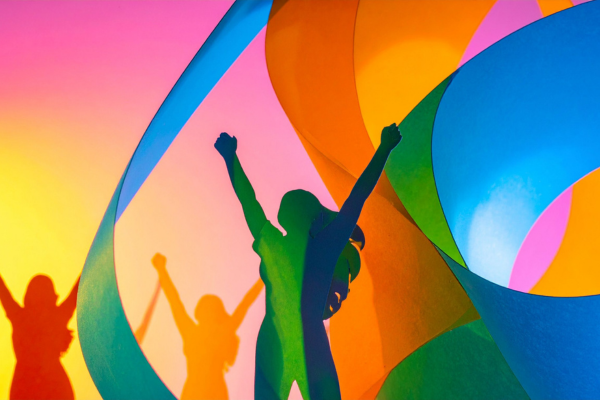
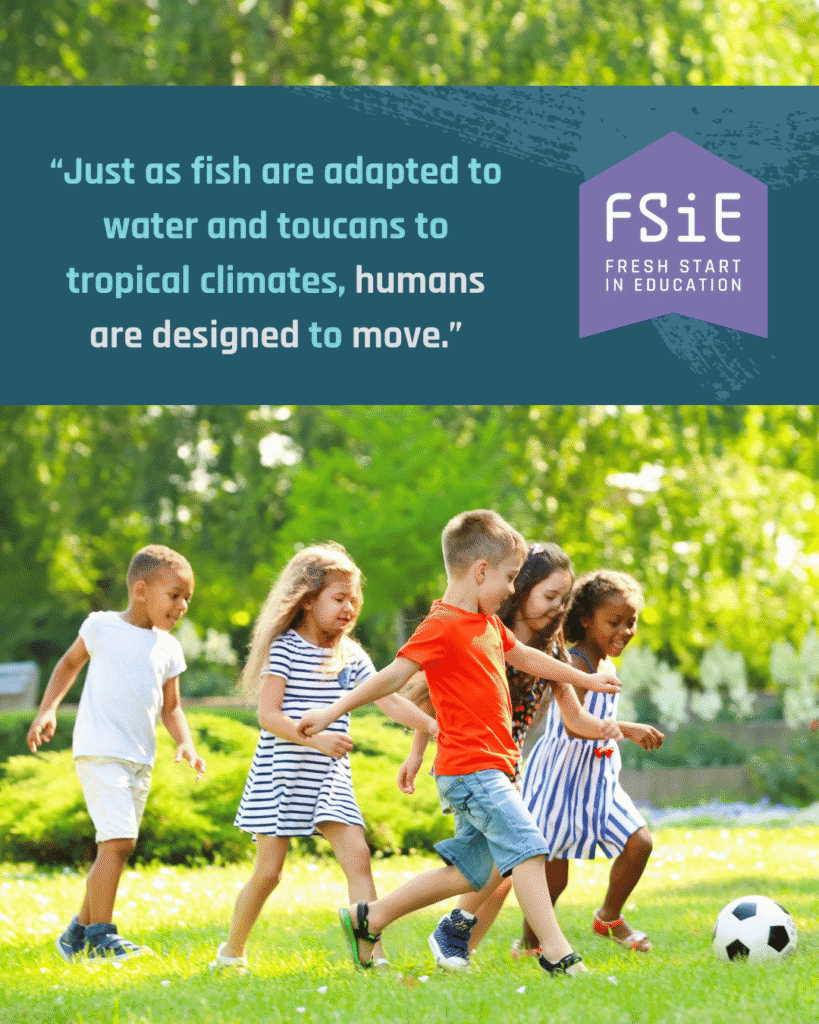
Just as fish are adapted to water and toucans to tropical climates, humans are designed to move. Our senses exist to scan the environment for safety and danger, and our nervous systems prioritise safety and regulation over reasoning and problem-solving. We naturally have a ‘pack mentality’, meaning we are wired for connection. So, when children spend their days in crowded buildings filled with noise, fluorescent lighting, constant transitions, and prolonged sitting, should we really be surprised when some struggle to cope?
In the context of our biology, what our bodies experience in school looks something like this:
- A busy sensory environment means our survival brain must work in overdrive to constantly assess the environment for threats. Every new sound or visual requires assessment, imposing excessive demands on the thalamus and prefrontal cortex and altering our feeling of safety.
- Our bodies used to measure danger in terms of immediate threats: wild beasts, heights, and extreme weather. These days, those concrete dangers are replaced by abstract pressures, such as exam results, fear of behaviour consequences, and friendship stresses. The brain often processes social and psychological threats through many of the same stress pathways that evolved to respond to physical danger. It activates the same hypothalamic-pituitary-adrenal (HPA) axis designed to get us safely away from that angry mammoth. Our nervous systems become primed to fight, flight or freeze, but are in no way ready to reason and learn.
- Physical well-being is also closely connected to brain function and regulation. The cerebellum and motor cortex are involved not only in movement but also in coordination, attention, and some aspects of cognitive processing. When bodies sit still for extended periods, we experience discomfort, fatigue, and a reduced ability to concentrate.
Considered this way, it really isn’t surprising that children disengage, exhibit behaviours of distress, or withdraw from school completely. It is also important to note that many of these survival reflexes are heightened in neurodivergent people, who may be hypersensitive to specific sensory inputs or find certain situations more distressing. These children are therefore more vulnerable to the effects of inappropriate environments.
So, what can we do to help? The good news is that nature, as our habitat, provides many of the answers.
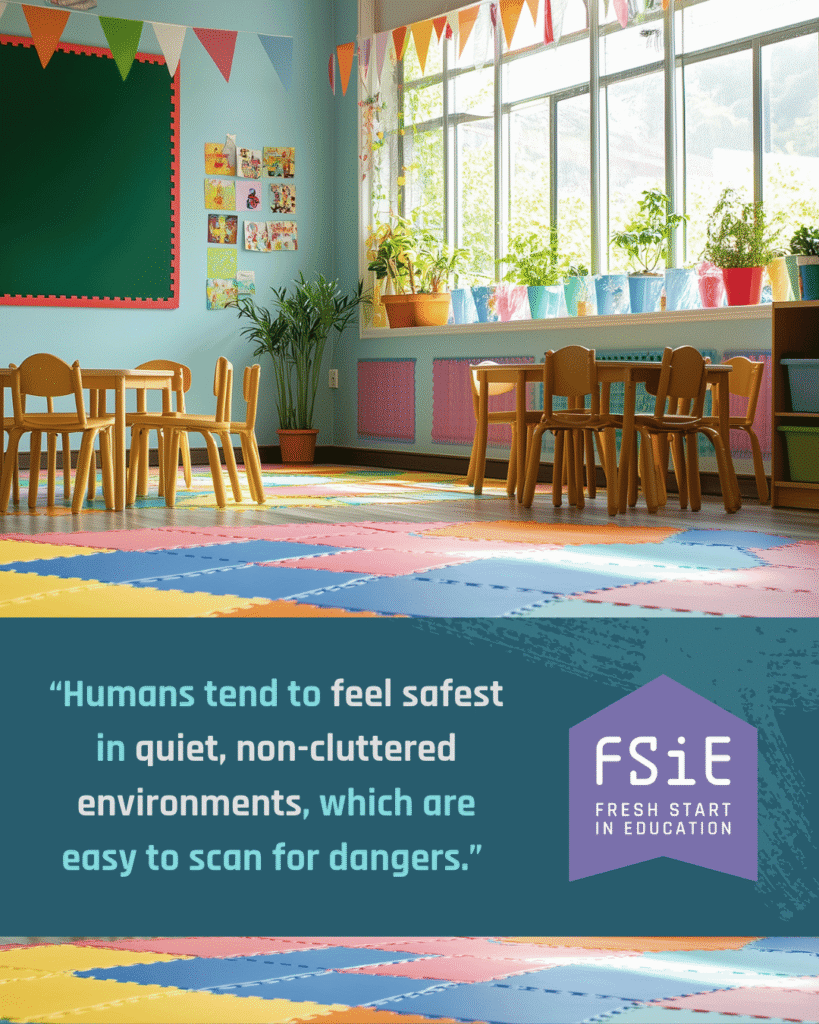
Humans tend to feel safest in quiet, non-cluttered environments, which are easy to scan for dangers. Creating calm, non-cluttered classrooms and corridors can make a world of difference. Ditch the pointless posters and give children’s sensory processing a moment’s peace. There is also limited research suggesting that humans are naturally calmer around certain colours, such as blue and green, which we may associate with water and safety. All these reasons mean that learning outside is particularly helpful.
Building movement into the school day is another must. This should include regular movement breaks, but it is very easy to incorporate movement into learning activities, too. If children really do need to sit and listen for a short period, ensure that they have a chance to move immediately afterwards.
It’s also important to reprogramme children’s perceptions of danger. For those who feel endangered every time they make a mistake, speak in front of others, or fall out with a friend, we cannot expect them to simply override deeply embedded stress responses. Teaching emotional regulation skills go a long way to mitigate this, but we also must check ourselves. If we overreact when a child gets a question wrong, we can’t be surprised when they perceive danger from our reactions.
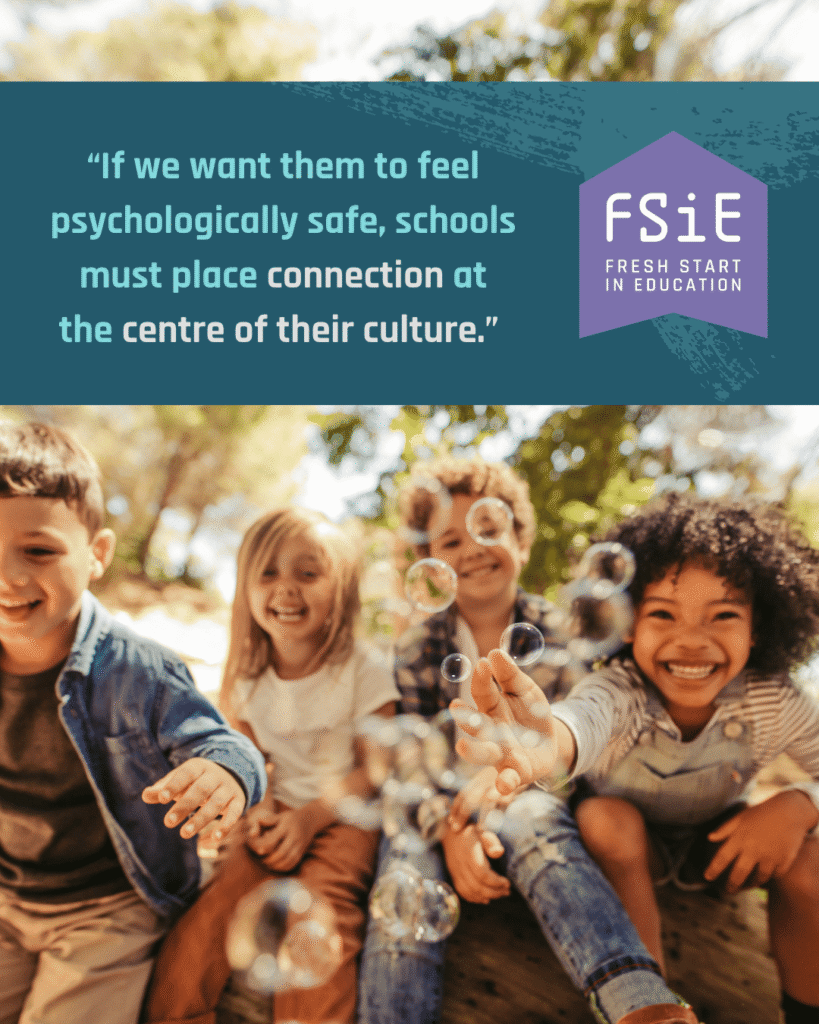
Finally, we must remember that humans are ‘pack’-orientated, always craving connection. We survive because of our relationships with others, so when we feel rejected or unseen, that feeling of danger quickly rears its head. We must make time to build connections with children and support them in connecting with each other. A sense of belonging rarely develops through rigid power structures or behaviour management systems that punish children rather than actively supporting them. If we want them to feel psychologically safe enough to learn, schools must move beyond compliance alone and place connection at the centre of their culture.
Alongside these approaches, it is also hugely important to recognise that, as in all ecosystems, biodiversity is a strength. Highly rigid curricula and pedagogical approaches assume a level of uniformity that has never existed within human populations. Such approaches only make sense if our aim is homogeneity. Our classrooms are full of different humans who bring different things to the table, and that is crucial to the survival of humanity. Embracing varied ways of learning, different types of knowledge, and diverse forms of expression is crucial.
If we are to improve all children’s mental health, wellbeing and learning, we need to make radical changes to school cultures and environments. Ironically, the most radical change we could make shouldn’t be radical at all: we just need to adapt and respond to humans. We are relational, sensory beings whose biology still shapes the way we learn, connect, and feel safe.
Perhaps meaningful inclusion begins with recognising that humans do not cease to be nature-orientated when they pass through the classroom door.