Behaviour is communication
I have spent twenty years in classrooms. I am also a mother of two neurodivergent sons. And the one thing I keep coming back to, in both roles, is how often we punish children for telling us something we haven’t learned how to hear.
That child rocking in their chair? Not defiant. Trying to express something. The one who has zoned out, staring at the wall? Not lazy. The student who walks out? Not a troublemaker. Every one of them is communicating. And far too often, we ignore the message and we ignore the child.

Who are we actually talking about?
Roughly 15 to 20 percent of the population is neurodivergent. That includes autism, ADHD, dyslexia, dyspraxia and other neurodevelopmental conditions. In England, about 14 percent of pupils are identified as having Special Educational Needs and 4.8 percent have an Education, Health and Care Plan (Department for Education, 2024). In a class of thirty, several children are navigating learning with brains that process information and sensory input differently from what the system was designed for.
And the system was designed for compliance. Stay still. Look at me. Don’t speak. Be quiet. Face the front.
For some students, those instructions are manageable. For many others, they create problems before any learning has the chance to happen.
The sensory reality nobody talks about
We see challenging behaviour in neurologically atypical children because we almost never think about the sensory environment of the classroom.
Bright fluorescent lights. Chairs scraping on hard floors. Thirty voices. Bodies moving everywhere. A corridor door banging without warning. Some students can filter those out. For others, those are the most prominent features of the room. The lesson is background noise; the noise is the foreground.
Concentrating under those conditions can feel like trying to think clearly in the middle of a rock concert. The brain is not just focusing on what the teacher is saying. It is working constantly to process and filter sensory input at the same time.
Most people think about five senses. But three others shape how children experience a classroom in ways schools rarely discuss.
Vestibular is the sense of balance and movement. Some children need to rock or shift position to self-regulate. Proprioception is the sense of where your body is in space. When this system is unreliable, children bump into things or move constantly just to feel grounded. Interoception is the ability to recognise internal signals like hunger, thirst, and rising emotion. When interoception is unreliable, a child may not recognise they are becoming anxious until they are already overwhelmed.
When any of these systems are struggling, sitting still in silence is not calming. It can make things worse.
A child who is fidgeting is often self-regulating. Someone swinging in their chair may be trying to gain awareness of where their body is. A student who has disconnected may be overloaded and doing the only thing their nervous system will allow. These are not disruptions. They are reasonable responses to the environment.
What “paying attention” actually costs
Sit still. Stop fidgeting. Look at me.
These phrases are heard in classrooms every day. But what if the child literally cannot do what is being asked?
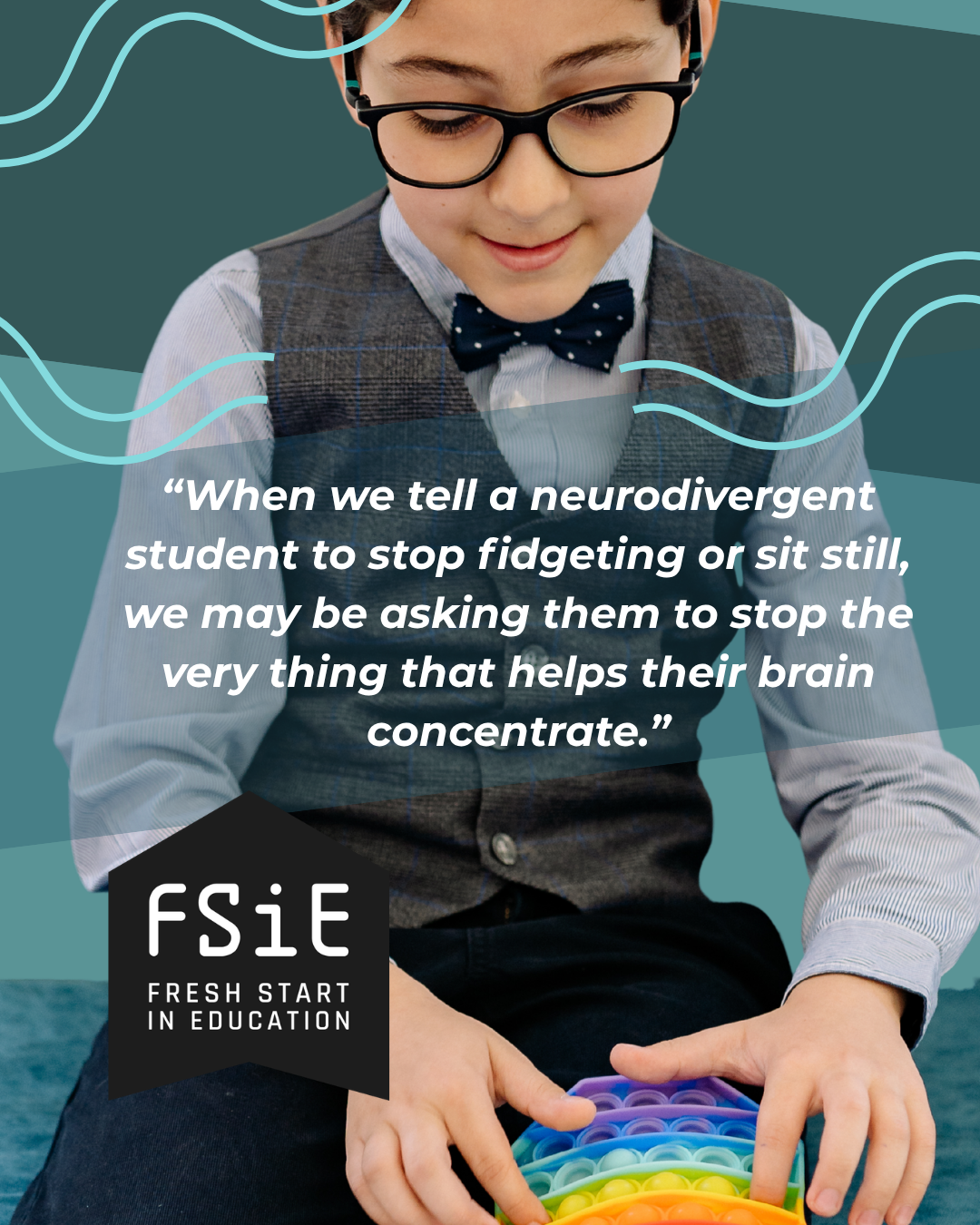
When we tell a neurodivergent student to stop fidgeting or sit still, we may be asking them to stop the very thing that helps their brain concentrate. The effort of controlling their body then drains the same cognitive energy they need for learning. The instruction does not help them focus. It competes with focus.
Learning does not always look like stillness. One child may absorb a lesson fully while doodling. Another may need to tap their fingers or shift in their seat. Those behaviours look distracting from the outside, but they are often the thing making learning possible.
The “laziness” myth
One of the more damaging beliefs in education is that students who struggle academically are not trying hard enough.
Think about what actually happens when a neurodivergent child is given a written task. A neurotypical student might read the instructions and begin. But another child is doing several things at once before they write a single word: processing the language of the instructions, filtering the background noise that has not stopped, working out where to begin, translating thoughts into written form and managing the anxiety that has been building since they sat down. That is not laziness. That is cognitive traffic.
What looks like procrastination is often task paralysis. The brain knows what it wants to do. It cannot organise the steps to get there. When adults mistake this for a motivation problem, the support they offer misses entirely. They try to push harder when the child needs the barriers removed.
Shutdowns, meltdowns and running out of road
When the cognitive and sensory demands exceed what the nervous system can handle, something gives.
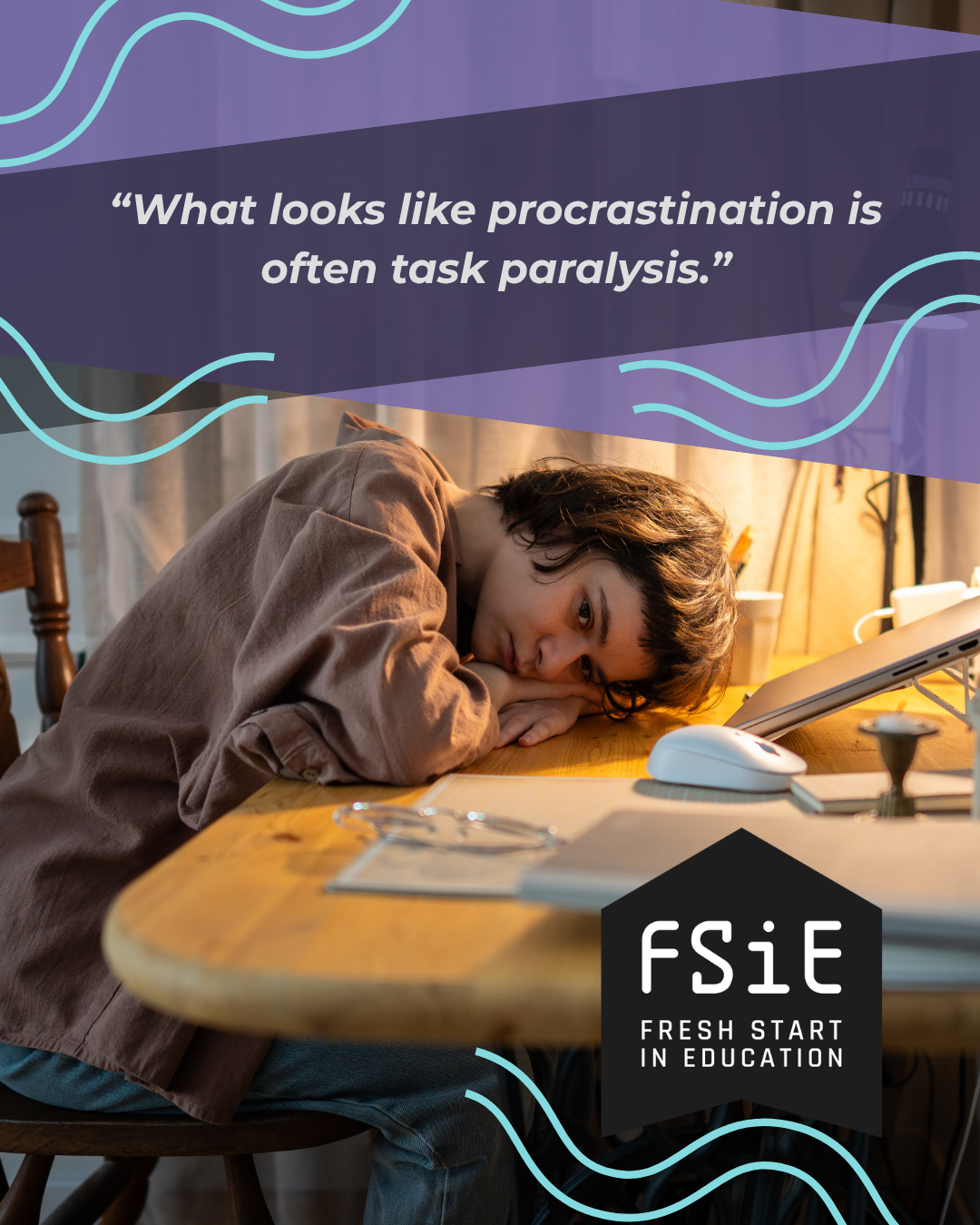
Meltdowns get noticed. Shutdowns often do not. A child in shutdown might gaze at their work without reading it, rest their head on the desk, go very quiet, or stop answering questions. It looks like defiance. It can look like laziness. But what has actually happened is that their brain has run out of capacity. There is nothing left to give.
Inconsistency is one of the most misunderstood traits in neurodivergent children. Psychologists describe this as a “spiky profile”: a child can perform brilliantly one day, then struggle with the exact same task the next. That inconsistency leads many adults to a flawed conclusion. If they can do it sometimes, they can do it all the time.
Think of it like a phone battery. On a full charge, everything feels manageable. On ten percent, the same set of tasks feels impossible. The ability has not changed. The energy to access it has. When a child is in shutdown, telling them to try harder will do nothing. They need to be regulated first.
The last professionals schools listen to
I have sat in meetings as the professional and I have sat in them as the parent. The dynamic is different on the other side of the table. You know your child better than anyone in the room, and nobody is asking you.
Parents of neurodivergent children can often recognise overwhelm before it arrives. They know what helps their child self-regulate, what makes them anxious, and what triggers a collapse. Evidence shows that when schools genuinely partner with parents, children do better and discipline issues are reduced (Education Endowment Foundation, 2023).
Yet a Parentkind study found that 85 percent of parents wanted a more active role in their child’s education, while 43 percent felt schools did not value their input.
Parents are not the opposition. They are often the most knowledgeable resource in the conversation. When schools include them properly, the support provided almost always improves.

Reframing the question
I have been on both sides of this conversation. The educator managing a complex classroom. The SEND tutor trying to bridge the gap. The parent sitting across from a panel of professionals who have already made up their minds.
This is not about blame. It is about asking a different question.
Not: How do we fix this behaviour?
But: What is this behaviour telling us and how can we respond in a way that actually helps?
When a child’s behaviour is understood rather than punished, they stop resisting the system. They start trusting it. And that is when the real learning begins.